It’s still a question that I get asked often. It is a vast subject, I admit. One that could very well elicit a doctorate program one day, but… it’s actually much simpler than what most people think. Although the field of permaculture encompasses a wide range of disciplines, such as hydrology, soil microbiology, systems sciences, climatology, and agriculture, it is fundamentally grounded in the simplest form of human comprehension, and that is: survival. It’s in our blood. It’s what allowed our species to survive through enormous climactic shifts and numerous mass extinctions. It’s also what allowed generations of humans to live peaceful, healthy lives before industrialization. Although those stories are rarely told.
Permaculture is inherently instinctual, meaning that it resides in our subconscious. Perhaps this could explain why it’s still a somewhat obscure subject. We’re constantly making new discoveries about it, so we’re not really sure yet how to grasp it or fully encompass it, but it’s in us. It’s in all of us.
For a long time I’ve anticipated the eventual formalization of permaculture as a rigorous doctorate degree program, dedicated to cultivating “Doctors of the Earth”. The formation of such a program would entail the synthesis of hundreds of millenia of prehistoric ecological history. We’d really have to look within to find it.
Permaculture is not a novel invention. It is an ancestral knowledge system embedded within the very fabric of human evolution. And yet, many people still don’t understand what it is. They think they need to read the entire Permaculture Design Manual, or leave their home and fly to another country to live on a farm for five years. And my answer to them is, yes and no. You don’t have to build an herb spiral, a creek with check dams, and a hugelkultur bed that takes 6 years to establish. You don’t have to catalogue every organism in your bioregion or be able to draft an engineering design of every known permaculture feature to be able to learn and practice it.
You can start with the philosophy alone, and this can be applied to your daily life. Permaculture is the art of building relationships that benefit everyone involved.
It’s a lot like compounding interest, but instead of riding the chaos of stock markets, you’re dealing with the most grounded form of wealth that exists. Food that nourishes, herbs that heal, pure potable water, clean air, and a home on the earth that does not result in the poisoning of ecosystems.
Yes, permaculture is a design science. It’s ethical, it’s about growing food. But I wonder who understands that it’s also the culmination of everything humans once knew about how to belong to the earth, and not the other way around.
The reason we need a word to describe this natural phenomenon is that we need to learn it again. We need a beacon in order to find like-minded people to reclaim, resist, and rewrite. What we need is the antidote to colonialism itself. And as Lyla June puts it, we need to all come together on the same side. “The only weapons that are useful in this battle are the weapons of truth, faith, and compassion,” she valiantly states in her speech,
3000-Year-Old Solutions To Modern Problems.
And when you place these remembrances against the backdrop of everything that’s happened…
genocide as a means of “settlement”, slavery as the foundation of agriculture, poisoned soils and loss of topsoil resulting from the industrial revolution, food-access injustices, food deserts where the only options are chemical-laden, nutrient-deficient fluff… you start to see the need for a naming of remembrance.
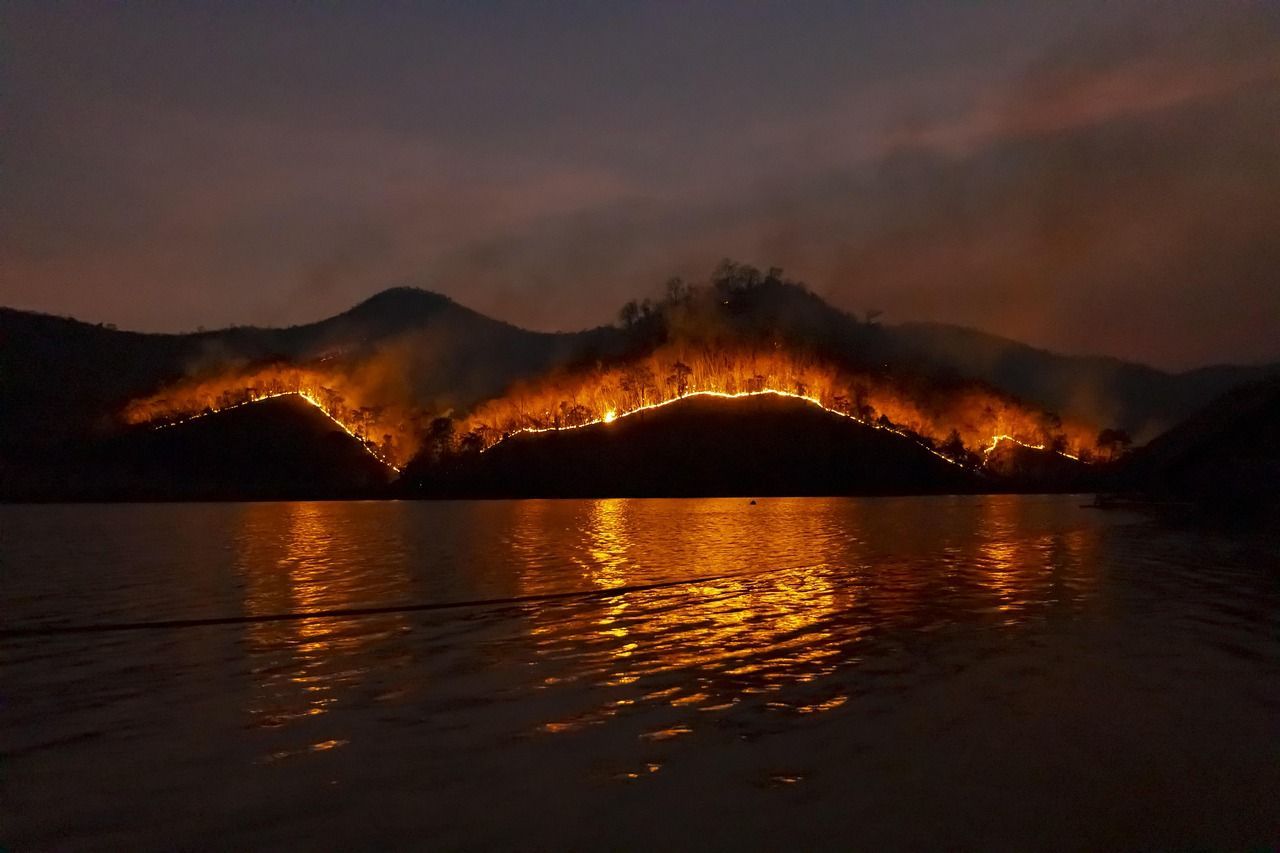
And to me, permaculture now needs to be the synthesis of ancestral wisdom and modern science, because we need to adapt to a quickly changing landscape. Climate change is accelerating, topsoil is vanishing, and the current methods for urbanization, tech, and Ai are destroying wildlife. We’re living in the midst of a global mass extinction, and as a society, we’re massively in denial about it.